
Beyond the Candid Photo: What It Really Means to Hire a Wedding Photojournalist
A wedding photojournalist is more than someone who takes candid photos.
Over the years, “documentary” has become one of the most popular words in the wedding photography industry. Couples are looking for images that feel honest, emotional, and natural. They want photographs that feel like memories rather than a collection of perfectly arranged moments.
And I completely understand why.
The photographs that become the most meaningful years later are often not the ones you expected. They are the moments you never saw happen because you were busy getting married, celebrating with your favorite people, and experiencing the day in real time.
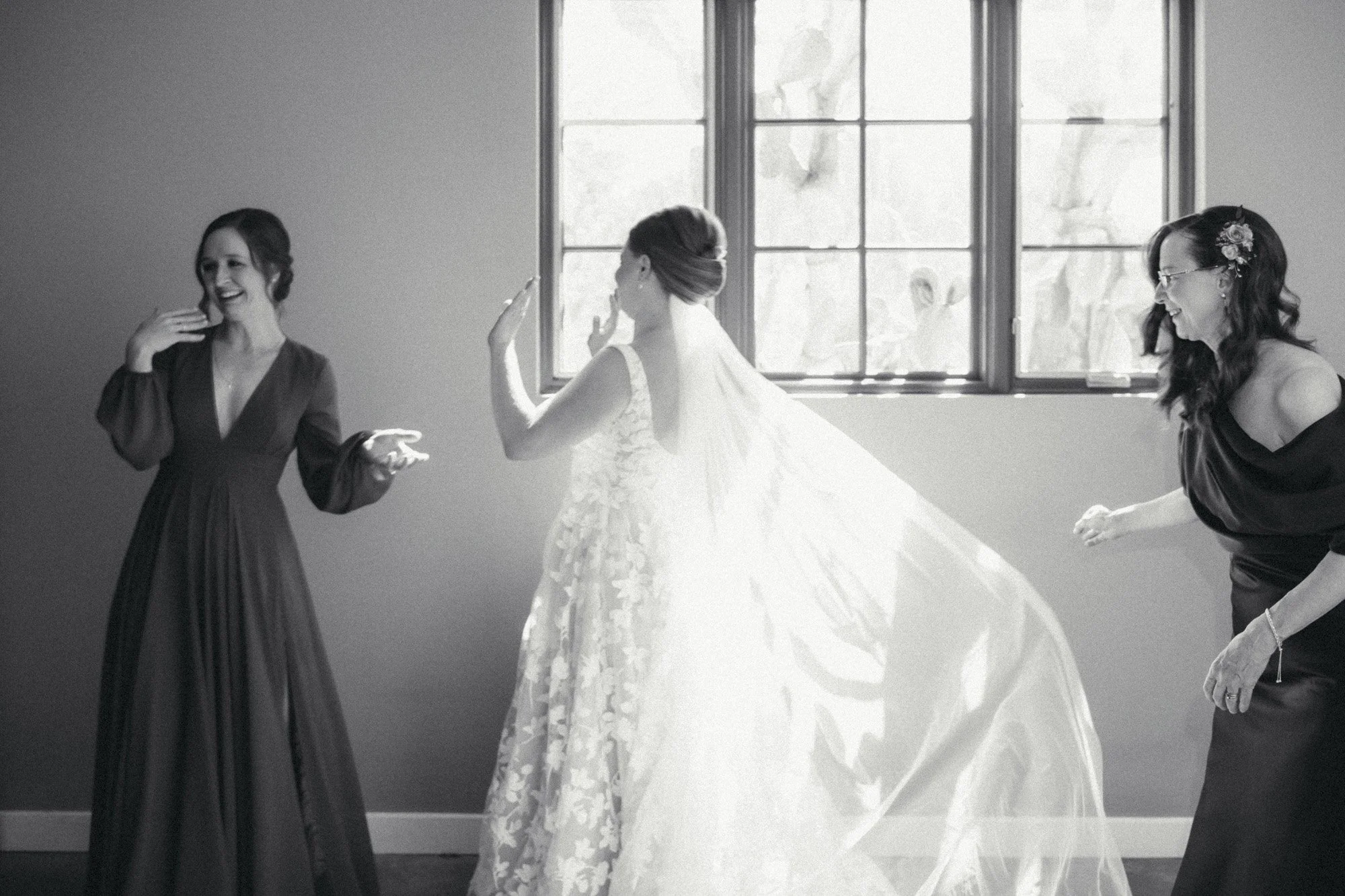
It’s the expression on your dad’s face before he walks you down the aisle. The way your best friend looks at you during the ceremony. The laugh that happens five minutes before everyone sits down for dinner, not just the ones during the toasts (also equally charming and wonderful).
But those photographs I mentioned require more than simply being present with a camera.
They take observation, anticipation, and a posture of readiness.
That is the foundation of photojournalism… but that’s not all. Because if that were it, then everyone claiming to be documentary could also be photojournalist, right? …hmm
What is a wedding photojournalist?
At its core, photojournalism is the practice of documenting real moments through photographs in a way that tells a larger story. Okay, check. Traditionally, photojournalists work for newspapers, magazines, wire services, and publications where their responsibility is to communicate history, events, and human experiences visually.
A photojournalist is not simply looking for a beautiful image. They are looking for a truthful one.
That seemingly small difference hugely matters.
While many wedding photographers capture candid moments throughout the day, true documentary storytelling goes beyond photographing something that just happened naturally, and happened to get caught on camera. It is about understanding the context surrounding the moment, recognizing what makes it meaningful, and creating an image that allows someone outside of that moment to understand why it mattered.
A photograph of someone crying is only one piece of information.
A photograph of a mother wiping away tears while watching her child get married tells a story. Context is king, and in photography, that’s called framing!
The emotion is not only in the expression. It is in the relationships, the timing, and everything happening around it.
That is the difference between capturing a candid and creating a photograph that preserves a memory.
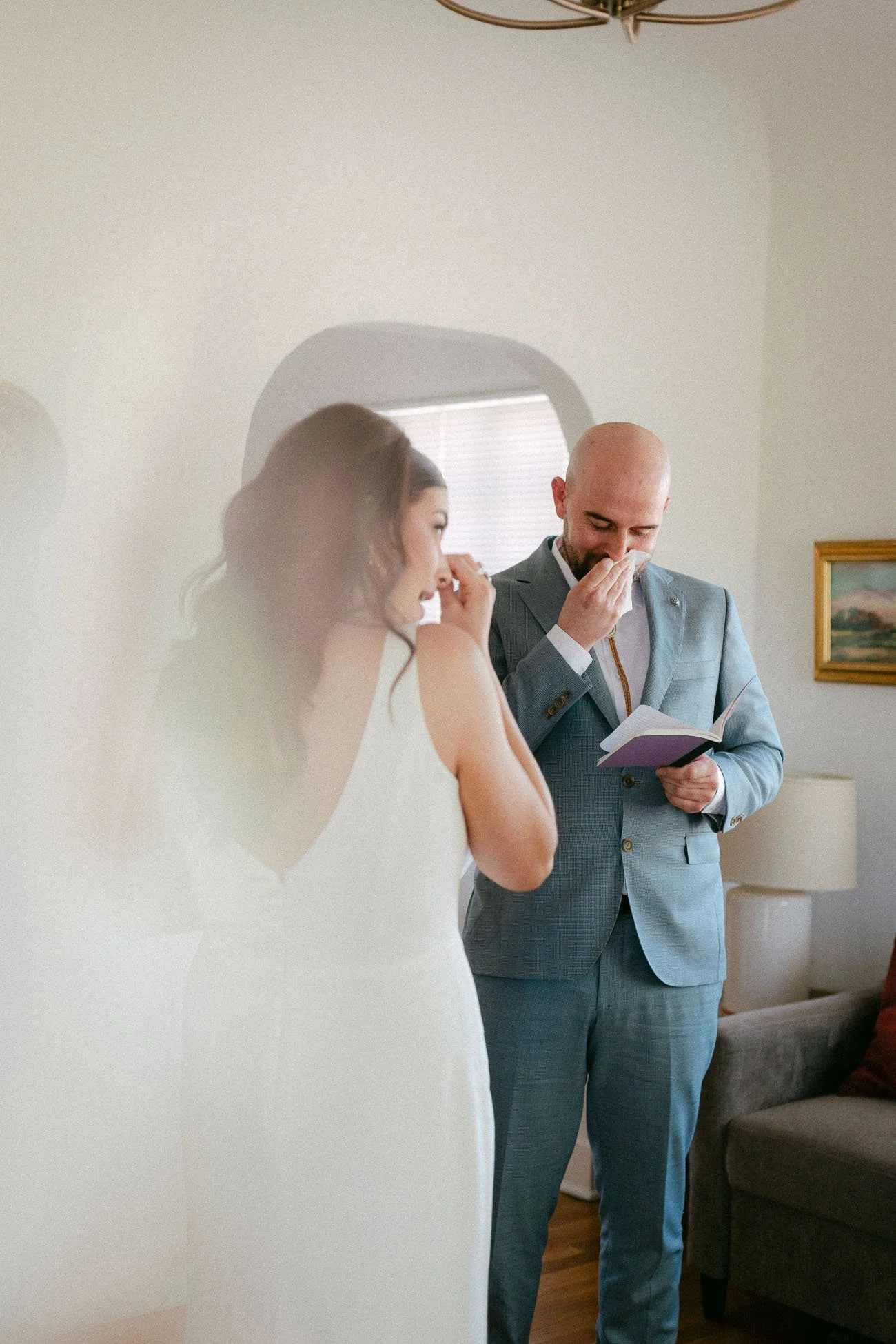
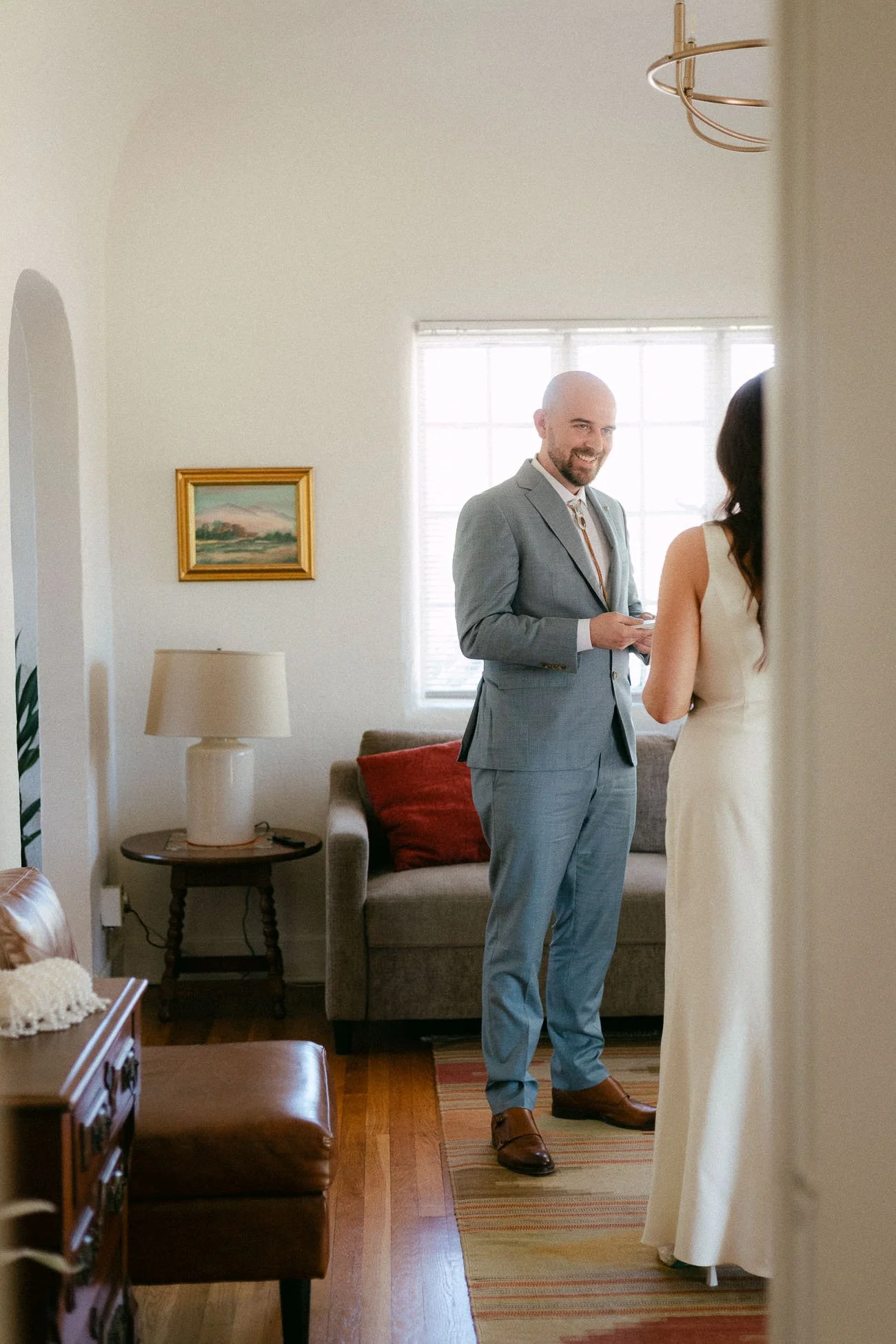
Photojournalists are documentary storytellers who anticipate moments before they happen
One of the first things I learned as a photojournalist was the importance of arriving early, staying present, and understanding the environment before the important moments happen.
My background in sports photography taught me another skill that cannot simply be learned from a camera manual: anticipation.
Sports photographers are constantly predicting what is about to happen. You learn to read body language, movement, timing, and momentum so that you are ready before the peak moment arrives. Wedding days require the same skill. The best photographs often happen in the seconds before the obvious moment.
The deep breath before walking down the aisle.
The nervous laugh before seeing each other for the first time.
The split second before a room erupts into celebration, and knowing who to have the lens on, and which lens to have on the camera!
The reaction from the people standing just outside the frame.
A wedding photographer is not just documenting what happened. They are constantly looking for what is about to happen. That instinct comes from years of practice, observation, and experience.

Storytelling requires context, not just emotion
One of the biggest misconceptions about documentary wedding photography is that it means the photographer simply steps back and takes pictures without direction.
That is not how storytelling works. Anyone who tells you that they can completely becoming invisible doesn’t understand that a human being in a room can never become completely invisible. Being invisible is an illusion, so it’s better to understand the weight and responsibility and ethics of storytelling than pretend that having a zoom lens and hiding away is making things “better”. Might be making it weirder, just saying.
Even in journalism outside of a wedding, the photographer's choices matter. Where you stand, when you press the shutter, what you include in the frame, and what you choose to leave out all influence the story being told.
The same is true on a wedding day.
A photograph does not become meaningful simply because it is candid. It becomes meaningful because it communicates something.
The bride laughing with her friends while getting ready tells a different story when you also see the half-finished makeup brushes, champagne glasses, and the chaos of everyone preparing around her. A grandparent sitting quietly during the ceremony becomes more powerful when you understand their relationship to the couple.
The details, the people, and the environment all work together to create the full story.

Journalism ethics still influence the way I photograph weddings
One of the biggest differences between my background in actual photojournalism and the way the term is sometimes used in the wedding industry is the foundation of journalistic ethics.
Photojournalists are trained to document reality responsibly. Historically, publications have held photographers to strict standards regarding accuracy, context, and truthful representation. The goal is not to create a more exciting version of reality. The goal is to preserve what actually happened.
While weddings naturally allow for much more creativity than a traditional news assignment, that foundation still guides my approach. I am not interested in manufacturing moments that never existed, recreating emotions for the sake of a photograph, or turning your wedding day into a styled shoot for my portfolio.
My responsibility is to understand your story, recognize what makes it unique, and document it in a way that feels honest to who you are.
This philosophy also influences the way I approach editing. While photography allows for artistic interpretation, I believe editing should enhance an image rather than rewrite history. I will be sharing more about my editing process and philosophy in a separate article soon.

Your wedding photographs should feel like your wedding
Your wedding should not look like a collection of images that could belong to anyone.
Beautiful photography is not about recreating the same perfect gallery over and over again. It is about understanding what makes your relationship, your family, and your celebration unique.
Some couples care deeply about the emotional moments with family. Others want the energy of a packed dance floor captured. Some prioritize fashion, design, and intentional details. Others care most about the people who traveled from across the country to celebrate with them.
My job is not to force every wedding into the same visual formula, but to understand what matters to you and document those things with intention.

Experience means solving problems before you ever notice them
Wedding days rarely unfold exactly as planned (sorry to burst any bubbles out there).
Timelines shift. Weather changes. Lighting becomes unpredictable. Family dynamics get complicated. Children decide they are finished cooperating for that one day, naturally. And the most important moments happen the quickest, of course.
A large part of being an experienced photographer is knowing how to adapt without making those challenges feel like challenges.
My background has required me to photograph fast-moving subjects, unpredictable environments, difficult lighting situations, and high-pressure moments where there is no opportunity to recreate the image.
You only get one chance to photograph a wedding day. That responsibility is something I take seriously, and I’m happy to!!

The photographs you remember are often the ones you never knew happened
The first kiss lasts a few seconds. The speeches eventually end. The dance floor eventually empties.
But years later, the photographs that bring you back to your wedding day are often the unexpected ones.
The people you love.
The moments you missed.
The small pieces of your story happening around you.
That is why hiring a wedding photojournalist matters.
Because your wedding photographs should not just show what your day looked like.
They should remind you exactly how it felt.